Friday, 31 May 2019

KNIGHTHOOD REJECTION LETTER OF TAGORE --- WRITE-UP : COURTESY, PROF. AMITAVA DATTA


WRITE-UP : COURTESY, PROF. AMITAVA DATTA
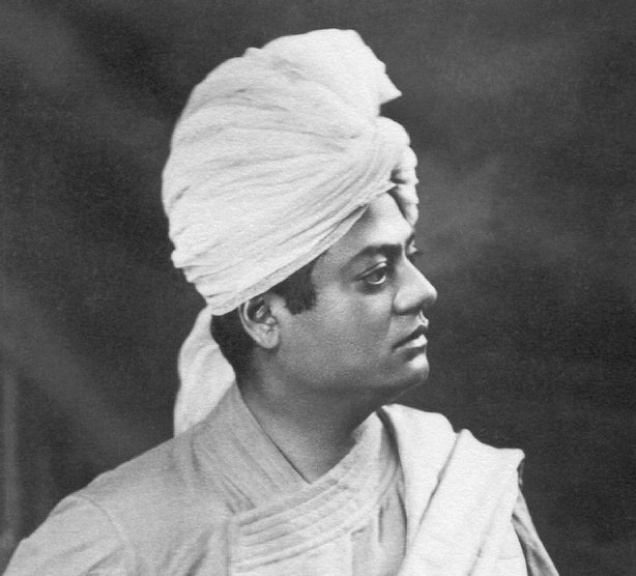
PHOTO : RABINDRANATH TAGORE (ADDED BY ME)

A public letter was written by Rabindranath Thakur(Tagore) to Lord Chelmsford, Viceroy of India on this day in 1919. In this letter, Rabindranath protested the Jallianwala Bagh massacre in Amritsar, Punjab (April 1919), and renounced the knighthood that had been conferred on him in 1915. The letter was published in The Statesman (June 3, 1919), and in the Modern Review (July 1919). The Letter:

Calcutta
31 May 1919

Your Excellency,
The enormity of the measures taken by the Government in the Punjab for quelling some local disturbances has, with a rude shock, revealed to our minds the helplessness of our position as British subjects in India. The disproportionate severity of the punishments inflicted upon the unfortunate people and the methods of carrying them out, we are convinced, are without parallel in the history of civilised governments, barring some conspicuous exceptions, recent and remote. Considering that such treatment has been meted out to a population, disarmed and resourceless, by a power which has the most terribly efficient organisation for destruction of human lives, we must strongly assert that it can claim no political expediency, far less moral justification. The accounts of the insults and sufferings by our brothers in Punjab have trickled through the gagged silence, reaching every corner of India, and the universal agony of indignation roused in the hearts of our people has been ignored by our rulers-possibly congratulating themselves for what they imagine as salutary lessons. This callousness has been praised by most of the Anglo-Indian papers, which have in some cases gone to the brutal length of making fun of our sufferings, without receiving the least check from the same authority-relentlessly careful in smothering every cry of pain and expression of judgement from the organs representing the sufferers. Knowing that our appeals have been in vain and that the passion of vengeance is blinding the nobler vision of statesmanship in our Government, which could so easily afford to be magnanimous as befitting its physical strength and moral tradition, the very least that I can do for my country is to take all consequences upon myself in giving voice to the protest of the millions of my countrymen, surprised into a dumb anguish of terror. The time has come when badges of honour make our shame glaring in the incongruous context of humiliation, and I for my part wish to stand, shorn of all special distinctions, by the side of those of my countrymen, who, for their so-called insignificance, are liable to suffer degradation not fit for human beings.
These are the reasons which have painfully compelled me to ask Your Excellency, with due reference and regret, to relieve me of my title of Knighthood, which I had the honour to accept from His Majesty the King at the hands of your predecessor, for whose nobleness of heart I still entertain great admiration.
Yours faithfully,
Rabindranath Tagore

Aftermath: Dyer was initially lauded for his actions by conservatives in Britain and became a hero among many of the people who were directly benefiting from the British Raj, for example, members of the House of Lords. However he was widely criticised by liberals in the House of Commons and in July 1920 a committee of investigation set up by the British Parliament censured him. No penal or strict disciplinary action could be given because his actions had been approved of by his military superiors, but he was disciplined by being removed from his current appointment, being turned down for a proposed promotion, and was prohibited from further employment in India. As such, he was forced to retire from the army and returned to England, where he died in 1927.

Written by Prof. Amitava Datta

THE MAHATMA AT 150 ... 1


THE MAHATMA AT 150 ... 1

This is the sesquicentennial (150th) year of Mahatma Gandhi's advent. Let us offer our homage to the Sage of Sabarmati who like the rishis of old graced this holy land and sanctified it. His contributions are legion and his impact on the world incalculable as would become a transcendent teacher of seminal attributes who could go beyond demarcation of territory to embrace the whole of humanity. Naturally, his local follies were many and we too often conflate the two issues, namely, his contribution to the world and the monumental mistakes committed by him while guiding India through her revolutionary struggle for freedom. This obscures the real Gandhi and either raises him unto a divine platform of supposed infallibility or denigrates him as the culprit of Partition et al. Chauri Chaura, Tripuri, experimentation in continence, picking the wrong horse for the Prime Ministerial post, all these pale into insignificance before the lustre of this frail human being of supreme humanity and monumental folly.

Genius is ever the resultant of diametrically divorced attributes whose harmony necessarily is non-existent. So is the character of Gandhi, full of stupendous contradictions, follies and foibles, yet shining like an effulgent star across the night sky of terrestrial darkness. The beams are for us to gather, for us to wear about our world of infantile dreams and mature into manliness, for us to lead ourselves through 'the night of the dark', and in so doing we will have paid our befitting homage to this rishi of our times the like of which the world sees but once in several millenia. May we rise up to the occasion at this unique moment in the unfolding of the Mahatma's greater life that transcends the bounds of time and space and truly makes him a saint of supreme significance!

Written by Sugata Bose

P.S. : COMMENTS --

Tapan Bhattacharya : In so many incidents as like as Bhagat Sing case his stands were not appropriate for the real freedom fighters. But he projects himself as a BRITISH PRODUCT to demolish the Revolutionery attempts.

Sugata Bose : Keep up the criticism, Tapan Babu, and in Bengali, too, for all to read so that the issue is kept alive.


LEADER, LIGHT AND THE FLOCK ... 1


LEADER, LIGHT AND THE FLOCK ... 1

The individual of clarified conception serves as a beacon for the masses. He leads by dint of his realisations and men follow him implicitly. He wields his will over the multitude and his wisdom holds it to attention. Ultimately it is character that dominates proceedings, dictates terms to all and sundry, aligning them in sympathetic domains for quickened spiritual evolution. The leader leads the way and the masses follow. A wise leader, and a valorous one at that, guides his flock along progressive lines unto maturing glory and freedom.

Written by Sugata Bose

Thursday, 30 May 2019

DEWDROPS ... 2

DEWDROPS ... 2

He who shares, cares;
He who cares, shares.

Who loves the most, lives the most,
For all of life is threaded in love.

The cosmos is held in love divine.

A kind word may save a life;
A life saved may save the world.

Sleep covers up consciousness
But divine dreams awake one
To the One within.

The hours of toil
Will be the hours of fruition.

Let us daily die
To infuse life into the masses.

The poor are divinities on earth;
Serving them is the highest worship.

The surface-whirl is Maya.
Dive deeper to behold the beloved.

God is
Where time is not.

Written by Sugata Bose

WE, THE PEOPLE OF INDIA ... 6


WE, THE PEOPLE OF INDIA ... 6

It was so nice to see the spiritual culture of ancient India spread out in the neighbouring countries in their attire and attitudes today at the swearing-in ceremony of the Union Government at the Rashtrapati Bhavan. The visiting dignitaries exhibited their indigenous Indian culture to my great delight. Alas, if only all Indians also did so !

Written by Sugata Bose

WE, THE PEOPLE OF INDIA ... 5

WE, THE PEOPLE OF INDIA ... 5

The heritage of India may be preserved by us living up to it truly instead of indulging in superficial allegiance to it. The history of the land must be studied, known, understood, interpreted and advanced by our active participation as the continuing links to the legacy we have inherited. Ours is an ancient civilisation, true, but not a dead one. Ours is a pulsating, living culture with roots in unrecorded antiquity but shoots all over overspreading our variegated national life. Let us be proud of our heritage and let us grow each day as individuals whose collective fruition shall be the growth of our nation. Let each Indian proclaim with voice of truth that they bear absolute allegiance to the motherland. May India rise to save herself and the world from catastrophic consequences that otherwise, for sure, will consume humanity, threatened as it is by the destructive forces unleashed by the delirious, delusive and diabolical elements of medieval monstrosity !

Written by Sugata Bose

WE, THE PEOPLE OF INDIA ... 4

WE, THE PEOPLE OF INDIA ... 4 

Appeasement of the minority communities is detrimental to the solidarity of the nation and is opposed to the spirit of the Constitution of India as well. Beholding the nation as an integral whole is the right attitude and anything that opposes this spirit must be opposed with all energy and enthusiasm.

Nationhood must transcend sectional allegiance, be it religious, racial or linguistic, and this preeminent feature of the Constitution must be constantly stressed on. However, for all this allegiance to Constitution, the history and heritage of our ancient motherland must not be lost sight of and the blueprint of the Indian civilisation dating from millenia behind this day must be adhered to, for the avenue of advancement must be along the track trodden by the sages and saints of this holy land and not along any novel path imposed upon us by conquest or contamination in the name of global influence. We must be true to our spiritual heritage and must develop along the line envisaged by the rishis (seers of Truth), in accordance with the prescriptions enjoined upon us by the most enlightened document we have been blessed with --- the Constitution of India. 

Written by Sugata Bose